The Lincoln Wheat Penny is one of the most iconic coins ever produced by the United States Mint. First issued in 1909, it marked the debut of Abraham Lincoln on U.S. coinage and quickly became a staple of everyday commerce. Nearly seven decades after the series ended in 1958, Wheat Pennies remain a cornerstone of serious coin collections.
For modern collectors and investors in 2026, understanding Wheat Penny values requires more than glancing at a date. Rarity, mint mark, condition, and mint errors all influence pricing. This comprehensive guide provides a clear overview of what to look for and what certain key dates are worth in today’s market.
The Origin of the Wheat Penny
The Wheat Penny was introduced in 1909 to commemorate the 100th anniversary of Abraham Lincoln’s birth. Designed by sculptor Victor David Brenner, the coin features Lincoln’s profile on the obverse and two wheat stalks framing the reverse.
The design remained in production until 1958. In 1959, the reverse was replaced with the Lincoln Memorial design to mark Lincoln’s 150th birthday.
From 1909 to 1942, the coin was composed primarily of 95% copper. During World War II, material shortages prompted a temporary switch to zinc-coated steel in 1943. Copper returned in 1944, using recycled wartime shell casings.

Today, the Wheat Penny stands as both a historical artifact and a strategic collectible.
What Determines Wheat Penny Value?
Not all Wheat Pennies are valuable. Many are worth only modest premiums above face value. However, specific factors can significantly increase a coin’s worth.
Year and Mintage
Lower mintage years tend to carry higher values. Early dates and certain Depression-era issues are especially desirable due to limited production.
Mint Mark

Wheat Pennies were struck in:
- Philadelphia (no mint mark)
- Denver (D)
- San Francisco (S)
San Francisco and Denver issues are often scarcer in early years, especially in high grades.
Condition and Grading
Condition is critical. Coins are graded on a 1–70 scale. A heavily worn coin may be worth a few dollars, while the same coin in Mint State (MS65 or higher) could command hundreds or thousands.
Color designation also matters for copper coins:
- Brown (BN)
- Red-Brown (RB)
- Red (RD)
Full Red specimens typically bring the highest premiums.
Errors and Varieties
Mint errors and die varieties can transform an ordinary penny into a headline-worthy collectible. Double dies, repunched mint marks, and wrong-metal strikes are particularly valuable.
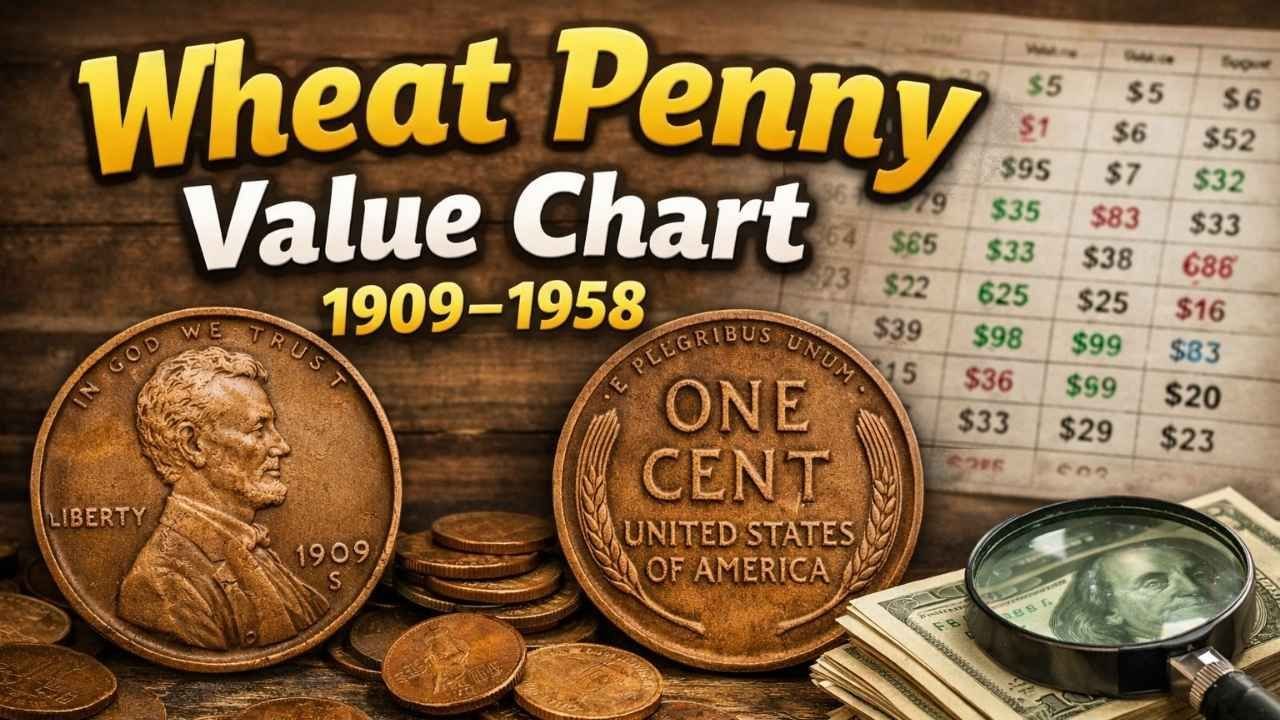
Wheat Penny Value Chart (1909–1958)
The values below reflect approximate prices for average circulated examples in 2026. Higher-grade coins can sell for significantly more.
1909
Average Circulated: $0.50–$2
Key Date: 1909-S VDB — $800–$1,500+
The 1909-S VDB is one of the most famous coins in American numismatics. Featuring Brenner’s initials prominently on the reverse, it had a low mintage of just 484,000 pieces.
1914-D
Average Circulated: $50–$100
A key rarity with strong long-term demand. High-grade examples can exceed several thousand dollars.
1922 No D
Average Circulated: $1,000–$5,000
This Denver issue mistakenly lacks a visible mint mark due to die wear. It is one of the most recognized error coins in the series.
1931-S
Average Circulated: $1–$3
Although not rare in absolute terms, its low mintage during the Great Depression makes it a better date within the series.
1943 Steel Cent
Average Circulated: $0.10–$0.50
Produced in zinc-coated steel instead of copper, these coins are common but historically significant.
Key Rarity: 1943 Copper — $200,000–$500,000+
A small number were mistakenly struck on leftover copper planchets. These are among the most valuable U.S. coins ever discovered.
1944 Steel Cent
Average Circulated: $75–$500
A reverse error of the previous year, a few 1944 cents were struck in steel instead of copper.
1955 Double Die Obverse
Average Circulated: $500–$1,000
This dramatic variety shows clear doubling in “LIBERTY” and “IN GOD WE TRUST.” It remains one of the most popular modern error coins.
1958
Average Circulated: $0.05–$0.25
The final year of the Wheat Penny series. Most examples are common, though high-grade Red specimens can carry premiums.
High-Grade Market Trends in 2026
The Wheat Penny market has matured significantly. While circulated examples of common dates remain affordable, top-tier certified coins have seen steady growth.
Collectors increasingly focus on:
- Low-population Mint State coins
- Full Red color designation
- Authenticated key dates
- Recognized die varieties
Third-party grading from respected services provides liquidity and confidence in higher-value transactions.
Registry competition has also fueled demand for premium-quality pieces, especially early San Francisco and Denver issues.
Are Wheat Pennies a Smart Investment?
Wheat Pennies offer a balanced entry point into rare coin investing. They combine historical significance, broad collector demand, and clearly defined key dates.
However, selectivity is essential.
Common dates in average condition rarely outperform inflation. Strategic acquisitions — particularly certified key dates and rare varieties — offer stronger long-term potential.
For investors building diversified tangible asset portfolios, rare Wheat Pennies can serve as a compact, transportable store of value with global recognition.
How to Evaluate Your Wheat Pennies
Start by checking:
- Date and mint mark
- Overall wear and surface condition
- Luster and color (Brown, Red-Brown, or Red)
- Signs of doubling or unusual features
Avoid cleaning coins. Even light cleaning can significantly reduce value.
If you suspect you have a key date or error coin, professional authentication is strongly recommended.
Final Thoughts
The Wheat Penny series represents nearly half a century of American history in one-cent form. From the celebrated 1909-S VDB to the legendary 1943 copper cent, these coins continue to capture attention in 2026.
While many examples remain modestly priced, the right date, mint mark, and condition can transform a simple penny into a premium collectible. For disciplined collectors and financially minded investors, the Wheat Penny remains one of the most accessible and rewarding areas of U.S. numismatics.