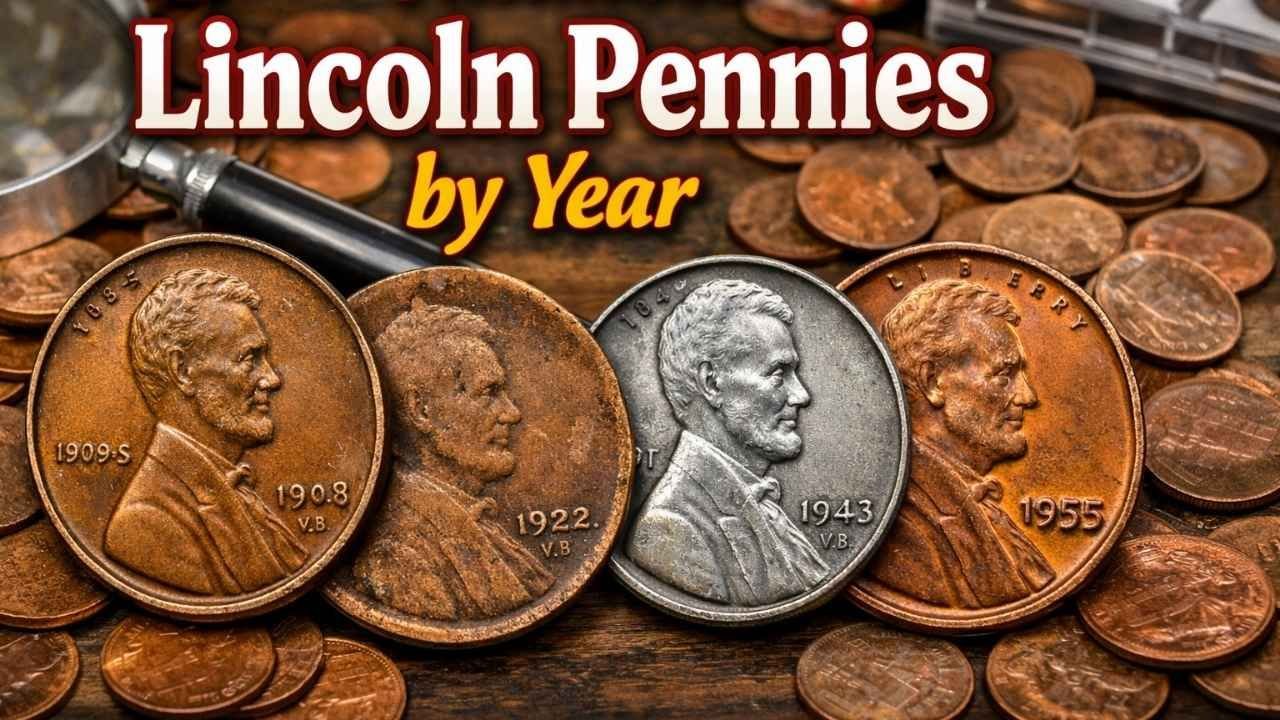
The Lincoln cent has been a cornerstone of American coinage since its introduction in 1909. While billions of these pennies have circulated over the decades, certain years and minting variations stand out as highly valuable. For collectors, investors, and history enthusiasts, recognizing which Lincoln pennies hold hidden treasures can turn a simple hobby into a rewarding pursuit. This guide explores the most valuable Lincoln pennies by year, the reasons behind their rarity, and how collectors can identify, preserve, and potentially invest in these coins.
The Birth of the Lincoln Cent
The Lincoln cent was first minted in 1909 to honor the 100th anniversary of Abraham Lincoln’s birth. Designed by Victor David Brenner, it was the first U.S. coin to feature a president’s portrait. The original reverse design included two wheat stalks, giving rise to the nickname “Wheat Penny.” From the start, production quirks and minting errors created coins that would later become prized by collectors worldwide.
1909 S VDB: The Holy Grail of Lincoln Pennies
The 1909 S VDB penny is perhaps the most legendary Lincoln cent. Struck at the San Francisco Mint, only 484,000 were produced before the designer’s initials, VDB, were removed due to public criticism. Today, this coin is considered a crown jewel among collectors. Depending on condition, prices can range from several thousand dollars to well over $100,000 for specimens in pristine, uncirculated condition.
1914 D: A Rare Denver Mint Treasure
The 1914 D penny is another standout. With only about 1.2 million minted at the Denver Mint, many were heavily circulated, making high-grade examples extremely rare. Collectors prize this coin for its scarcity and historical significance, with values ranging from hundreds to tens of thousands of dollars, depending on condition.
1922 No D: A Unique Minting Error
In 1922, the Denver Mint produced pennies using worn dies, resulting in a small number of coins missing the “D” mint mark. These “No D” pennies are highly sought after because they represent a genuine minting anomaly. Well-preserved examples are rare and can command thousands of dollars at auction.
1931 S: The Depression Era Rarity
The 1931 S Lincoln cent was minted during the Great Depression when production was significantly reduced. Only 866,000 were struck, making it one of the lowest mintage Wheat Pennies. Its rarity, combined with its historical context, makes it a must-have for serious collectors.
1943 Steel Pennies and Copper Errors
World War II created a unique situation for Lincoln pennies. Copper was diverted for ammunition, so the U.S. Mint produced pennies from zinc-coated steel in 1943. While steel pennies are common, a handful were mistakenly struck in copper. These rare 1943 copper pennies are among the most valuable Lincoln cents ever discovered, with some examples fetching hundreds of thousands of dollars.
1955 Double Die Obverse: A Collector’s Dream
The 1955 Double Die Obverse penny is famous for its dramatic doubling of the date and lettering. This minting error created a striking visual anomaly, making it one of the most celebrated error coins among collectors. Depending on condition, these coins can range from several hundred dollars to tens of thousands.
1969 S Double Die Obverse: Modern Rarity
Another significant double die error appeared in 1969 at the San Francisco Mint. The doubling on the obverse is bold and easily visible, making it one of the most dramatic modern error coins. Its rarity and visual impact make it highly desirable, with collectors willing to pay premium prices.
1972 Double Die Obverse
The 1972 Double Die Obverse penny features noticeable doubling on the date and inscriptions. Though slightly more common than the 1955 or 1969 varieties, it still holds considerable collector value and remains a favorite for those building error coin collections.
1982 Small Date Copper Penny
During the 1982 transition from copper to copper-plated zinc, both large and small date varieties were produced in copper. The 1982 small date copper penny is particularly rare and valuable, as only a limited number were struck before the complete switch to zinc.
1992 Close AM Penny
The 1992 Close AM penny is a subtle modern rarity. Caused by a proof die used for circulation coins, the spacing between the letters “A” and “M” in “AMERICA” is noticeably closer than normal. Collectors prize this nuance, and well-preserved examples can reach thousands of dollars in value.
1995 Double Die Obverse
The 1995 Double Die Obverse penny is one of the more accessible error coins for collectors. Doubling is visible on “LIBERTY” and the date, making it an attractive addition for both new and seasoned collectors. Its combination of rarity and affordability contributes to its popularity.
2009 Bicentennial Lincoln Pennies
In 2009, the U.S. Mint issued four special reverse designs celebrating Lincoln’s bicentennial and the centennial of the Lincoln cent. While common in circulation, certain proof and uncirculated versions have become collectible. These coins highlight Lincoln’s enduring legacy while offering modern collectors unique collectible options.
Identifying Valuable Pennies
Collectors must pay careful attention to details when identifying valuable Lincoln pennies. Key factors include:
- Mint marks such as S (San Francisco) or D (Denver)
- Errors like double dies, missing mint marks, or unusual letter spacing
- Condition, with uncirculated or high-grade coins commanding the highest values
- Historical context, which can add significance and appeal
Preserving and Investing in Lincoln Pennies
Proper care is essential for collectors seeking to preserve or invest in Lincoln pennies. Coins should be stored in protective holders to avoid damage, and cleaning should be avoided as it can significantly reduce value. Professional grading and certification services can enhance resale potential. Patience, research, and attention to detail are key, as rare coins often appreciate over time, offering both historical value and financial opportunity.
The Thrill of the Hunt
Part of the appeal of Lincoln penny collecting lies in discovery. Valuable coins have been found in pocket change, coin rolls, and family collections. The excitement of uncovering a hidden treasure keeps collectors engaged, offering a tangible connection to history.
Conclusion
The Lincoln cent is more than currency—it is a piece of American history, artistry, and innovation. From the legendary 1909 S VDB to modern rarities like the 1992 Close AM, valuable Lincoln pennies continue to captivate collectors and investors alike. By understanding which years and varieties hold hidden treasures, enthusiasts can embark on a rewarding journey combining history, passion, and financial opportunity. Whether a seasoned numismatist or curious beginner, the world of Lincoln pennies offers endless possibilities for discovery and appreciation.