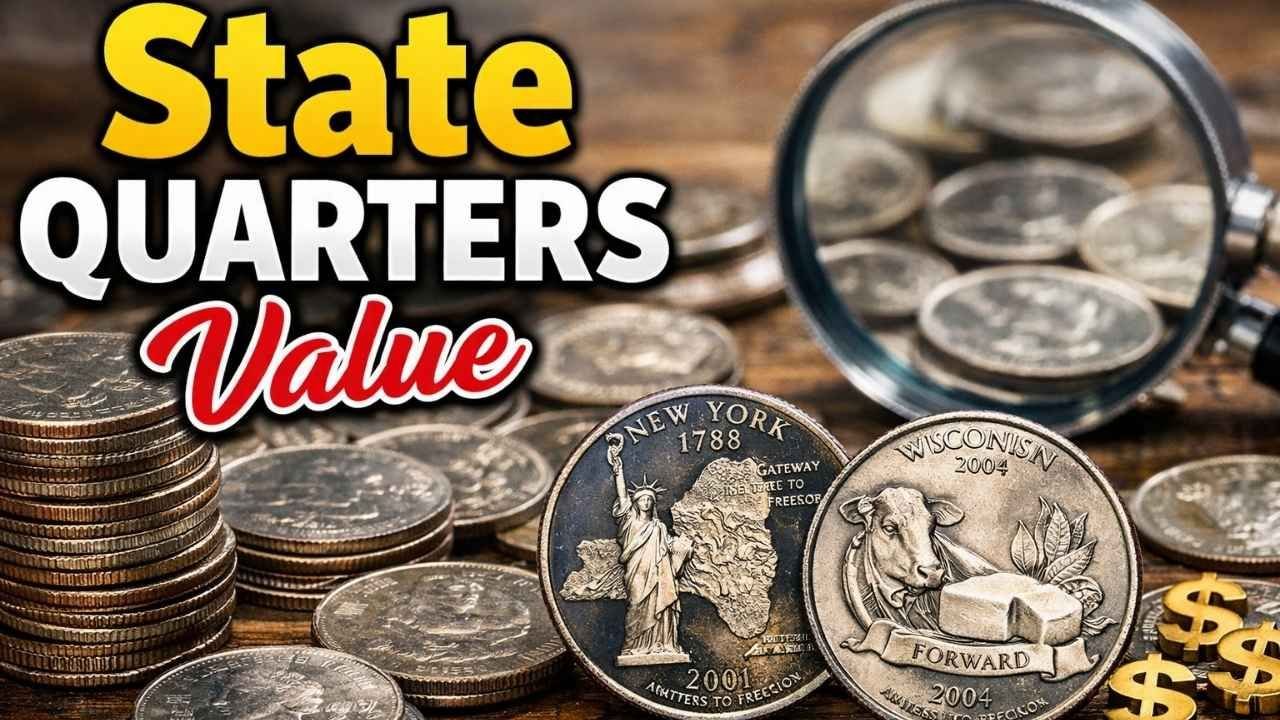
When the United States Mint launched the 50 State Quarters Program in 1999, few anticipated the cultural and financial impact it would have. By the time the final design was released in 2008, millions of Americans had begun examining their pocket change more carefully.
Now in 2026, interest in state quarters remains strong. While most examples are still worth face value, select coins — particularly in elite condition or with verified mint errors — command meaningful premiums. After more than a decade of observing auction trends, grading data, and collector behavior, one conclusion stands out: value in modern coins is driven by precision, scarcity within grade, and authentication.
Why Most State Quarters Are Still Worth 25 Cents
The State Quarters Program produced billions of coins between 1999 and 2008. High-mintage states such as Virginia, California, and Florida entered circulation in enormous quantities. As a result, circulated examples remain extremely common.
If a quarter shows visible wear, surface scratches, or dull luster from everyday use, it is typically worth its face value of 25 cents. In 2026, coin dealers rarely pay premiums for circulated pieces unless a verified mint error is present.
Scarcity — not age — determines modern coin value. Since these coins are less than three decades old, survival rates are high. The market rewards exceptional preservation, not simply ownership.
Condition Is King in 2026
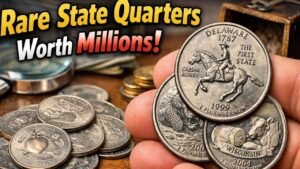
Modern numismatics revolves around grading precision. A coin’s condition can mean the difference between pocket change and a three-figure collectible.
Professional grading services such as Professional Coin Grading Service and Numismatic Guaranty Company evaluate coins on the Sheldon scale, with Mint State (MS) grades ranging from MS60 to MS70.
For example, a 2000 Massachusetts quarter in average uncirculated condition (MS63–MS65) may sell for only a few dollars. The same coin graded MS67 or MS68 — with razor-sharp strike, blazing luster, and virtually no contact marks — can sell for $50 or more. Population scarcity at higher grades drives the premium.
Coins graded MS69 are especially rare for circulation strikes. Even microscopic imperfections can dramatically reduce a coin’s grade and value.
Registry set competition continues to influence prices in 2026. Advanced collectors building top-ranked sets are willing to pay substantial premiums for the finest known examples.
The Most Valuable State Quarter Errors
Where excitement truly builds is in error coins. Minting mistakes, when authenticated, often outperform standard uncirculated coins in long-term value growth.
2004 Wisconsin Extra Leaf Quarter
One of the most famous modern mint errors is the 2004 Wisconsin quarter featuring an extra leaf on the corn husk. Two main varieties exist:
- Extra High Leaf
- Extra Low Leaf
These anomalies were likely caused by die gouges or alterations. In high grades, authenticated examples regularly sell for $150 to over $1,000, depending on condition and market demand.
Experimental Planchet Errors
The 1999 Delaware quarter struck on an experimental planchet is another notable rarity. These pieces were mistakenly struck on test metal blanks and later discovered by collectors. Verified examples have sold for several thousand dollars at auction.
Other Collectible Errors
Collectors also seek:
- Off-center strikes
- Double die varieties
- Struck-through errors
- Wrong planchet strikes
Authentication is critical. Error coins without third-party verification often struggle to achieve premium prices.
Silver Proof State Quarters
Not all state quarters were intended for circulation. The United States Mint also released proof versions for collectors, including 90% silver editions sold in annual proof sets.
These silver quarters carry intrinsic bullion value tied to silver prices. In 2026, individual silver proof quarters typically trade between $5 and $15, depending on metal prices and condition.
Complete silver proof sets from 1999 through 2008 often sell for several hundred dollars when preserved in original government packaging. Premiums increase for pristine, untouched sets with strong eye appeal.
Unlike circulation coins, proof quarters feature mirror-like fields and frosted design elements, making them visually distinct and highly collectible.
Key Dates and Tough Mint Marks
While no state quarter is traditionally “rare” in the classic numismatic sense, certain mint and grade combinations are surprisingly scarce at the highest certification levels.
Philadelphia Mint issues from the early 2000s can be difficult to locate in MS68 condition. The 2003 Missouri and 2001 New York quarters, for example, have demonstrated strong auction performance in elite grades.
The value gap between MS65 and MS68 can be dramatic — sometimes increasing tenfold. For advanced collectors competing in registry rankings, a single grade point can justify significant price differences.
Understanding population reports published by grading services helps identify which coins have genuine condition rarity.
Market Trends After 11 Years of Observation
The state quarter market has matured. In the early years after the program ended, speculative enthusiasm cooled and prices for common rolls declined. Many assumed the series had peaked.
Instead, the market stabilized.
Today, common coins remain common — but top-condition pieces and verified errors consistently attract serious buyers. The focus has shifted from bulk accumulation to quality selection.
In 2026, the state quarter market is steady and predictable. There are fewer speculative spikes, but strong coins continue to sell well. Knowledgeable collectors prioritize low-population grades, eye appeal, and authentication over hype.
Are State Quarters a Smart Investment in 2026?
State quarters should not replace diversified financial assets. However, selective collecting can be rewarding both intellectually and financially.
The strongest opportunities typically fall into three categories:
- High-grade certified coins with low population numbers
- Major, authenticated mint errors
- Complete silver proof sets in original packaging
Bank rolls rarely produce dramatic returns unless an error is discovered. Strategic buying, patience, and research consistently outperform luck.
For financially disciplined collectors, state quarters offer a low-barrier entry into modern numismatics with defined risk parameters and measurable grading standards.
How to Evaluate Your State Quarters
Start with condition. Look for sharp detail in Washington’s portrait, strong mint luster, and minimal surface marks.
Next, examine the mint mark located near George Washington’s ponytail:
- No mint mark: Philadelphia
- D: Denver
- S: San Francisco (proof issues)
Inspect the coin carefully for doubling, off-center alignment, unusual textures, or design anomalies.
If something appears unusual or pristine, consider professional evaluation. Avoid cleaning coins — cleaning almost always reduces value, even on rare errors.
Proper storage in protective holders also helps preserve condition and long-term value.
Final Thoughts on State Quarters in 2026
State quarters continue to hold a meaningful place in American coin collecting. They introduced a new generation to numismatics and remain widely collected nearly three decades later.
While most examples are still worth 25 cents, exceptional coins prove that modern issues can carry substantial premiums. In today’s market, condition, verified rarity within grade, and authenticated errors determine value far more than age alone.
For collectors who approach the series with knowledge and patience, state quarters still offer opportunity in 2026. Sometimes the next valuable discovery is already in circulation — quietly waiting to be recognized.