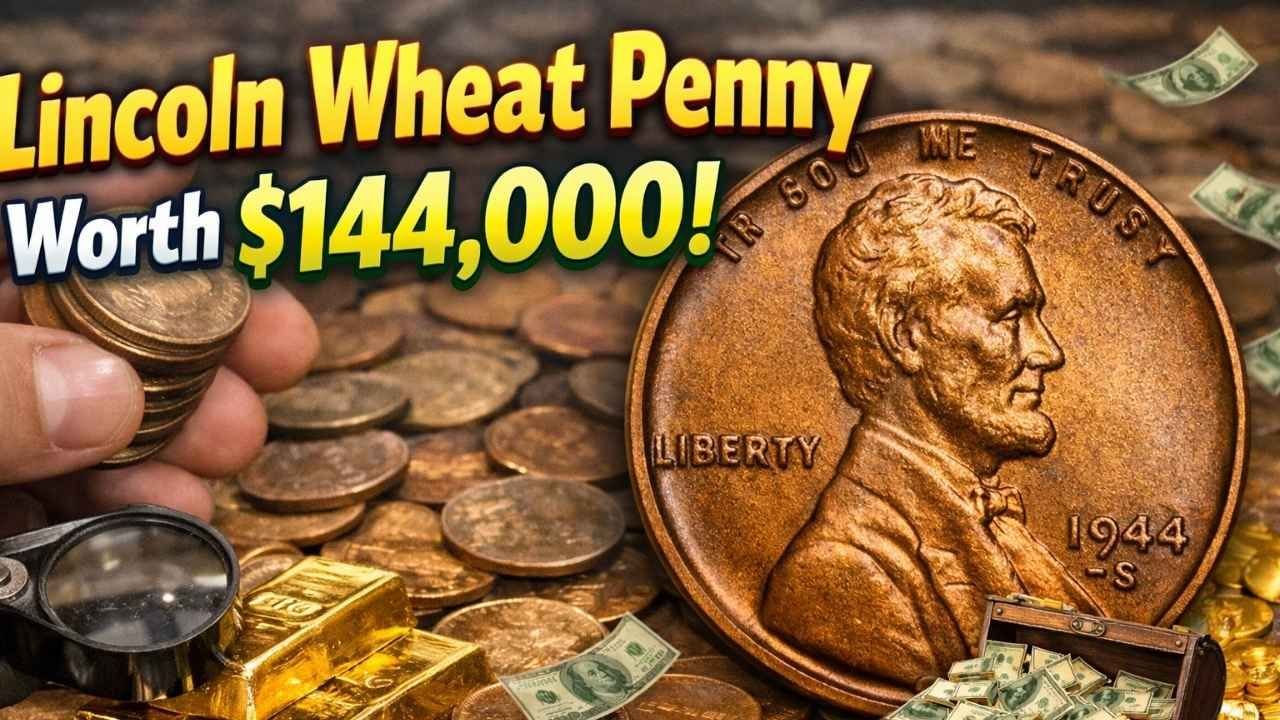
Imagine reaching into your pocket for spare change and discovering a penny worth $144,000. For most, it sounds like a fantasy, yet in the world of coin collecting, it is very real. The Lincoln Wheat Penny, one of the most iconic coins in American history, has produced rare variations that have become highly sought-after collectibles. What makes this possibility even more thrilling is that some of these pennies may still be circulating unnoticed, tucked into jars, wallets, or drawers.
The History of the Lincoln Wheat Penny
First minted in 1909 to honor the centennial of Abraham Lincoln’s birth, the Lincoln Wheat Penny marked the first time a U.S. coin featured a real historical figure. Designed by Victor David Brenner, the coin displays Lincoln’s portrait on the obverse and two wheat stalks on the reverse, a design that remained in use until 1958. In 1959, the Lincoln Memorial design replaced it.

While millions of these pennies were produced, only a select few exhibit rare errors or unique characteristics that dramatically increase their value. Most Wheat Pennies are worth only a few cents, but key dates and minting mistakes can transform them into collectibles worth thousands—or even hundreds of thousands—of dollars.
The Legendary 1943 Bronze Lincoln Wheat Penny
The most famous example of a high-value Wheat Penny is the 1943 bronze version. During World War II, copper was redirected to support the war effort, and the U.S. Mint switched to zinc-coated steel pennies for that year. Most 1943 pennies therefore appear silver, but a few leftover bronze planchets were accidentally struck with the 1943 date.
These rare bronze pennies are considered one of the most significant minting errors in American numismatic history. Their scarcity, combined with historical context, has caused individual coins to fetch prices as high as $144,000 or more at auction. Because so few exist, each discovery generates excitement and international attention among collectors.
Why the 1943 Bronze Penny Commands Such Value

Several factors contribute to the coin’s extraordinary worth:
- Rarity: Only a handful of these pennies are known to exist.
- Historical Significance: The coin reflects a pivotal moment in U.S. history, linking everyday currency to the global conflict of World War II.
- Condition: Coins preserved in near-mint state command substantial premiums.
- Collector Demand: Scarcity and provenance drive competition and higher prices in the numismatic market.
The combination of these elements transforms a simple penny into a highly coveted piece of history and an extraordinary financial asset.
Could One Still Be in Circulation?
The question that excites collectors and treasure hunters alike is whether a 1943 bronze penny could still be hiding in circulation. While most examples have already been discovered and authenticated, it remains theoretically possible. Pennies often pass from pocket to pocket, are stored in jars, or are inherited in collections without anyone realizing their value. A bronze 1943 penny, visually similar to ordinary copper pennies, could easily go unnoticed by an untrained eye.
However, the chances of finding one are extremely slim. Professional collectors and dealers have been actively searching for these rare coins for decades, and confirmed discoveries are few. Yet, stories occasionally surface of valuable coins being found in everyday change, reminding enthusiasts that surprises are always possible.
How to Identify a 1943 Bronze Penny
If you wish to check your own coins, there are a few key steps:
- Check the Date: The coin must be marked 1943.
- Inspect the Color: Genuine bronze pennies retain a traditional copper hue, unlike the silver-gray steel versions.
- Magnet Test: Steel pennies are magnetic; bronze pennies are not.
Caution is essential, as some coins may be altered to appear bronze, and counterfeits exist. Any suspected rare coin should be examined by a professional grading service to confirm authenticity.
Other Valuable Lincoln Wheat Pennies
While the 1943 bronze penny is the most celebrated, other Wheat Pennies can also hold exceptional value. Examples include the 1909 S VDB, known for its low mintage and designer initials, the 1914 D, and the 1922 No D. Additionally, coins with doubled dies, off-center strikes, or unusual minting variations can command significant prices depending on condition and rarity.
The Importance of Authentication
Because of the high stakes, authentication is critical. Professional grading services verify a coin’s authenticity, condition, and history, increasing buyer confidence and market value. Cleaning or mishandling rare coins can significantly diminish their worth, so careful storage and expert evaluation are essential.
The Thrill of the Hunt
Part of the allure of the Lincoln Wheat Penny lies in the potential for discovery. The idea that a humble coin could alter someone’s financial circumstances overnight is thrilling. Each coin carries history, artistry, and economic significance, and rare errors add an element of mystery. The 1943 bronze Lincoln Wheat Penny remains a legendary example of how minor mistakes can create extraordinary value.
Conclusion
The Lincoln Wheat Penny worth $144,000 demonstrates the incredible stories that can be hidden in everyday coins. While the odds of finding such a rare penny in circulation are slim, the possibility fuels the imagination of collectors and casual coin enthusiasts alike. Whether tucked away in a coin jar or circulating unnoticed, pennies continue to offer a glimpse into history—and occasionally, a chance for life-changing discovery.