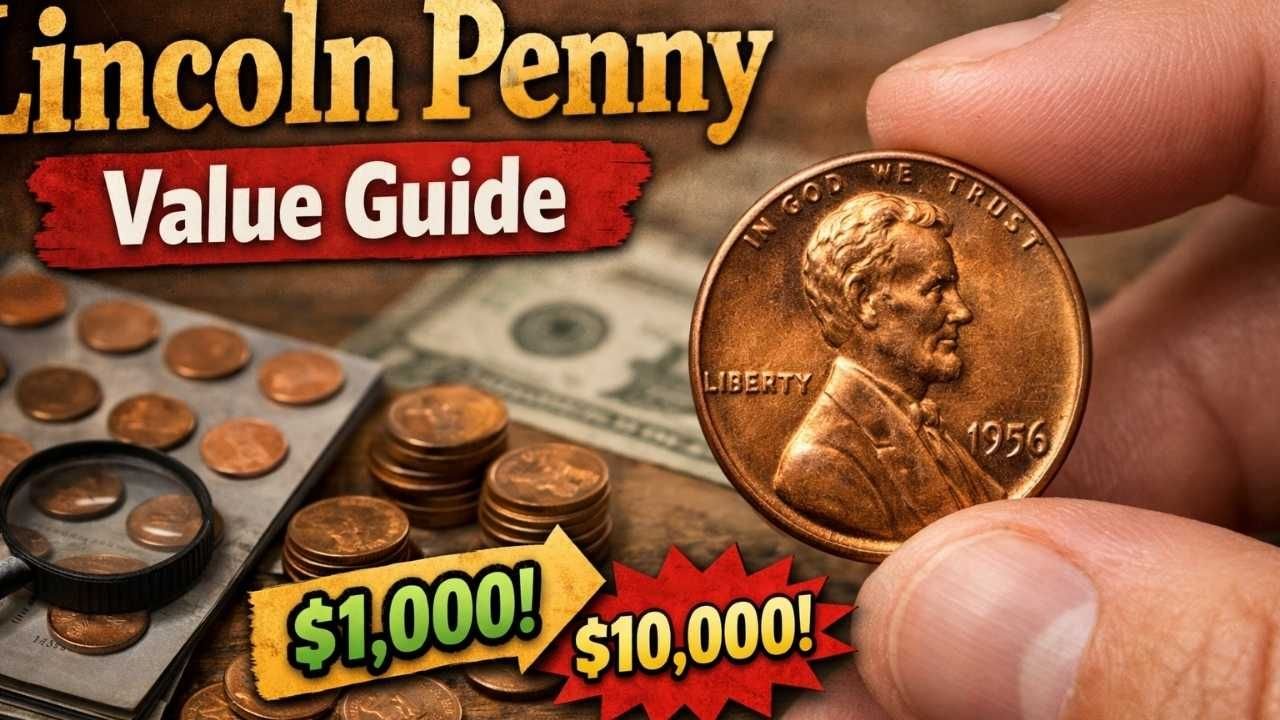
Few coins are as recognizable — or as widely collected — as the Lincoln cent. First introduced in 1909 by the United States Mint, the Lincoln Penny has remained in continuous production for more than a century. For collectors in 2026, it represents an accessible entry point into numismatics while still offering serious investment-grade rarities.
From the early Wheat cents to modern Shield reverses, values vary dramatically depending on year, mint mark, condition, and mint errors. This complete guide outlines what matters most in today’s market and highlights key dates every collector should know.
A Brief History of the Lincoln Penny
The Lincoln cent was introduced to commemorate the 100th anniversary of Abraham Lincoln’s birth. It replaced the Indian Head cent and marked the first time a real historical figure appeared on a regularly circulating U.S. coin.
The original design, created by Victor David Brenner, featured Lincoln’s portrait on the obverse and two wheat stalks on the reverse. This “Wheat Penny” design remained in use until 1958.
In 1959, the reverse changed to the Lincoln Memorial, designed by Frank Gasparro. In 2009, four special reverse designs commemorated Lincoln’s bicentennial. Since 2010, the penny has featured the Union Shield reverse.
Despite its modest one-cent denomination, the Lincoln Penny includes some of the most valuable and famous coins in American history.
What Determines Lincoln Penny Value in 2026?
While billions of Lincoln cents exist, only specific examples carry significant premiums. The following factors influence market value.
1. Year of Issue
Certain years had lower mintages or unusual production circumstances, making them scarcer today.
2. Mint Mark
Lincoln cents were struck in:
- Philadelphia (no mint mark until 2017 circulation issues)
- Denver (D)
- San Francisco (S)
San Francisco issues from the early 20th century are particularly desirable.
3. Condition and Grade
Condition remains the most important pricing factor. Coins are graded on a 1–70 scale. A worn example may be worth only a few dollars, while the same coin in Mint State (MS65 or higher) can command hundreds or thousands.
Copper coins are also evaluated by color:
- Brown (BN)
- Red-Brown (RB)
- Red (RD)
Full Red examples typically bring the highest premiums.
4. Mint Errors and Varieties
Double dies, off-center strikes, wrong planchets, and repunched mint marks can dramatically increase value.
Lincoln Penny Value Overview by Era
Wheat Pennies (1909–1958)
Common circulated Wheat cents typically trade between $0.05 and $0.50. However, key dates can reach four or five figures.
Notable examples:
1909-S VDB
One of the most famous U.S. coins. With a mintage under 500,000, circulated examples often sell for $800–$1,500. High-grade coins exceed several thousand dollars.
1914-D
A key rarity from Denver. Circulated specimens often range from $75 to $200, with uncirculated examples reaching far higher.
1922 No D
A famous error caused by a worn die at the Denver Mint. Depending on condition, values range from $1,000 to well over $10,000.
1931-S
Low mintage during the Great Depression. Circulated examples typically sell for $1–$5, with strong premiums in higher grades.
1943 Copper Cent
A legendary error coin. While most 1943 cents were struck in steel, a small number were mistakenly struck in copper. Authentic examples have sold for hundreds of thousands of dollars.
1955 Double Die Obverse
Dramatic doubling in “LIBERTY” and “IN GOD WE TRUST.” Circulated examples often bring $500–$1,000; higher grades command more.
Lincoln Memorial Cents (1959–2008)
Most Memorial cents remain close to face value unless in high Mint State grades or featuring notable errors.
Examples of interest:
1969-S Doubled Die Obverse
One of the most significant modern varieties. Strong examples can sell for thousands of dollars.
1982 Copper Small Date
The transition year from copper to zinc composition creates collectible varieties. Copper examples in high grade can bring modest premiums.
High-grade Memorial cents graded MS67 or above are increasingly sought after by registry collectors.
Bicentennial and Shield Cents (2009–Present)
The four 2009 reverse designs commemorating Lincoln’s life are widely collected. Proof and satin-finish examples can sell for $5–$20 depending on condition and packaging.
Modern Shield cents (2010–present) rarely carry premiums unless featuring certified high grades or striking errors.
2026 Lincoln Penny Value Snapshot (Circulated Estimates)
- Common Wheat cents (1934–1958): $0.05–$0.30
- Early Wheat cents (1909–1933): $0.25–$3+
- 1909-S VDB: $800–$1,500+
- 1914-D: $75–$200+
- 1922 No D: $1,000–$10,000+
- 1955 Doubled Die: $500–$1,000+
- 1969-S Doubled Die: $5,000+ depending on grade
Values increase significantly in Mint State or Red condition.
Year and Mint Mark Considerations
When evaluating a Lincoln cent:
- Confirm the date.
- Identify the mint mark below the date (if present).
- Examine condition under magnification.
- Check for visible doubling or unusual characteristics.
Early San Francisco issues (S mint mark) from 1909–1916 are particularly important for serious collectors. Denver-minted key dates like 1914-D and 1922 varieties remain market leaders.
Population reports from grading services help identify low-survival coins in elite grades.
Buying and Selling in 2026
The Lincoln cent market remains highly liquid. Collectors can buy and sell through reputable coin dealers, major auction houses, and online platforms.
Before purchasing high-value coins:
- Verify certification from a respected grading service.
- Review recent auction comparables.
- Avoid cleaned or altered coins.
For sellers, professional grading can significantly increase buyer confidence and final sale price for rare dates.
Are Lincoln Pennies a Good Investment?
Lincoln cents offer one of the broadest collecting bases in U.S. numismatics. Their affordability encourages new collectors, while key dates provide strong long-term demand.
However, selective buying is essential. Common-date coins in average condition rarely outperform inflation. The strongest investment potential lies in:
- Key-date Wheat cents
- Major doubled die varieties
- Low-population Mint State coins
- Rare composition errors
With disciplined selection, Lincoln cents can serve as both a historical collection and a tangible asset class.
Final Thoughts
More than a century after its debut, the Lincoln Penny continues to captivate collectors worldwide. While most examples remain worth only one cent, rare dates, mint errors, and high-grade specimens can command substantial premiums in 2026.
Understanding year, mint mark, condition, and verified rarity is the foundation of successful collecting. Whether building a complete date-and-mint set or targeting elite key dates, the Lincoln cent remains one of the most rewarding and accessible areas of American coin collecting.