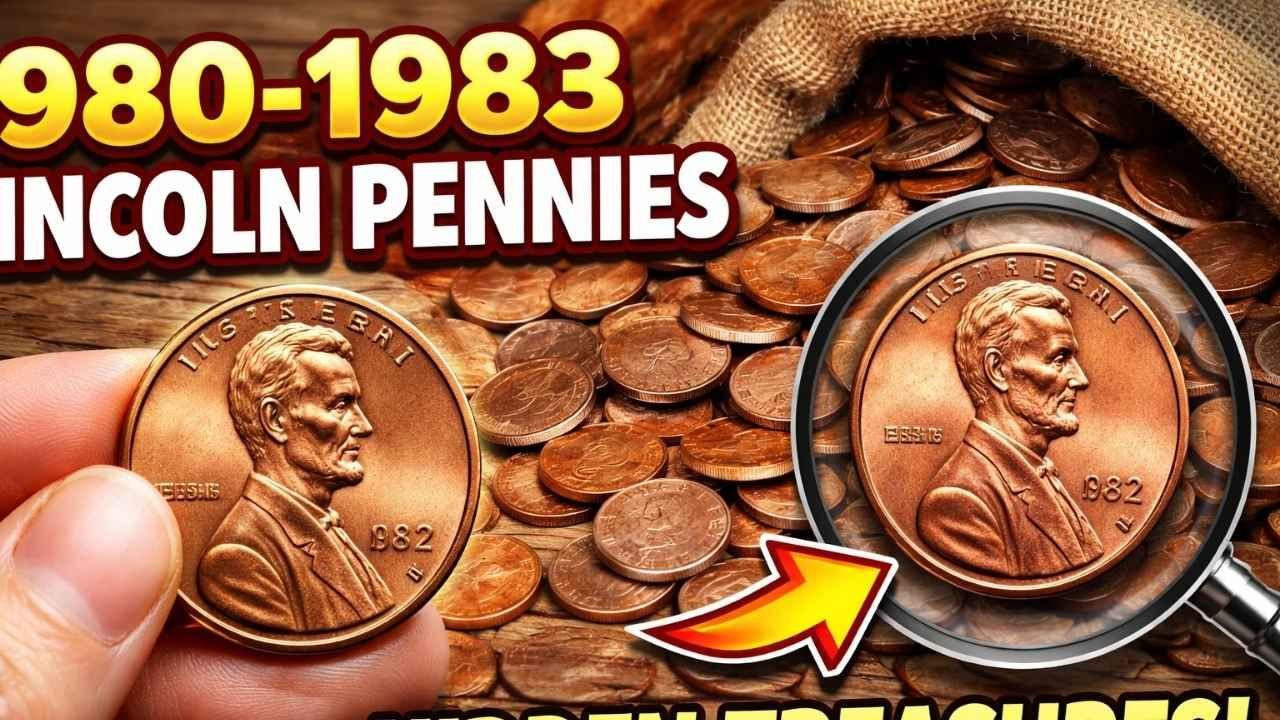
For decades, Lincoln pennies from the early 1980s were dismissed as ordinary pocket change. They lacked the antique appeal of early 20th-century issues and seemed too modern to command serious attention. Yet in 2026, collectors and investors are taking a closer look at 1980–1983 Lincoln cents—and discovering surprising value hidden in plain sight.
Driven by minting transitions, rare error varieties, grading scarcity, and rising interest in modern collectibles, these once-overlooked coins are quietly becoming strategic additions to forward-thinking collections.

If you have jars of old pennies stored away, now may be the time to reexamine them.
Why 1980–1983 Lincoln Pennies Are Gaining Value
The renewed attention surrounding early 1980s Lincoln cents is not based on hype. It stems from measurable shifts in rarity, preservation rates, and collector demand.
Several key factors explain the surge.
1. The Historic 1982 Composition Change

The most important development occurred in 1982. That year, the U.S. Mint transitioned from primarily copper pennies (95% copper) to copper-plated zinc cents due to rising metal costs.
What makes 1982 especially fascinating is that both compositions were struck during the same year. In fact, multiple variations exist, including:
- Large Date and Small Date designs
- Copper and zinc compositions
- Philadelphia (no mintmark) and Denver (“D”) mint issues
This combination created several distinct varieties. Some are common. Others are genuinely scarce—particularly certain Small Date copper varieties and transitional errors.
Because copper pennies weigh 3.11 grams and zinc pennies weigh 2.5 grams, a simple digital scale can identify composition. High-grade copper examples and rare variety combinations have sold for hundreds or even thousands of dollars, depending on condition and certification.
The 1982 transition year remains one of the most studied modern U.S. coin production periods.
2. The 1983 Double Die Reverse
Another standout from this era is the 1983 Double Die Reverse cent. This error shows clear doubling on the reverse inscriptions, especially in “E PLURIBUS UNUM” and “UNITED STATES OF AMERICA.”
Unlike minor machine doubling, true doubled dies are collectible mint errors caused during die creation. Strong examples of the 1983 DDR are highly sought after, particularly in uncirculated condition.
Because most 1983 cents were heavily circulated, sharply preserved examples are far scarcer than original mintage numbers suggest. Certified high-grade specimens continue to appreciate steadily.
3. Condition Rarity Is Driving Premium Prices
While billions of pennies were struck in the early 1980s, very few were intentionally saved in pristine condition. Most entered circulation immediately and accumulated wear.
Today, coins graded MS-65, MS-66, or higher represent a tiny fraction of surviving examples. In modern numismatics, condition rarity often matters more than overall mintage.
High-grade red (RD) examples with strong luster and minimal marks can command significant premiums at auction, particularly for Denver-minted issues and certain Philadelphia strikes.
As registry set competition grows, top-population coins continue to attract aggressive bidding.
Key Dates and Varieties to Watch
Although not every penny from 1980–1983 is valuable, specific issues deserve careful attention.
1982 Copper Small Date (Philadelphia)
This variety is considered one of the more desirable 1982 combinations. Correct identification requires close inspection of the date style and weight verification.
Certified high-grade examples remain scarce.
1982-D Copper Cent
The Denver copper issue is extremely rare in Small Date format and has become one of the most talked-about modern Lincoln varieties. Authentic examples must be professionally verified due to counterfeits and altered coins in the marketplace.
1983 Double Die Reverse
Strong doubling on the reverse lettering is the defining characteristic. Condition significantly impacts value.
1980-D and 1981-D High-Grade Examples
While not rare in circulated condition, top-grade uncirculated coins from Denver have seen steady collector interest due to limited availability in premium grades.
The Growing Appeal of Modern Coin Investing
An interesting shift has occurred in the coin market over the past decade. As classic key dates from the early 1900s reach price levels inaccessible to many collectors, attention has turned toward modern coins with identifiable scarcity and growth potential.
Early 1980s Lincoln cents fit that profile perfectly.
They offer:
- Recognizable U.S. design heritage
- Documented mint transitions
- Affordable entry points
- Increasing third-party grading demand
- Strong online collector engagement
For newer collectors, these coins provide an accessible gateway into serious numismatics. For seasoned investors, they represent undervalued modern assets with measurable upside.
Unlike speculative collectibles, these pennies benefit from established grading standards, transparent auction histories, and decades of market data.
How to Identify Valuable 1980–1983 Pennies
If you want to search your collection strategically, follow a disciplined approach.
Step 1: Check the Date and Mintmark
Separate coins from 1980, 1981, 1982, and 1983. Organize them by mintmark: Philadelphia (no mark) and Denver (“D”).
Step 2: Weigh 1982 Pennies
Use a precise digital scale accurate to 0.01 grams.
- 3.11 grams = copper
- 2.5 grams = zinc
This simple step can immediately narrow down potential varieties.
Step 3: Examine for Doubling
Use a quality loupe (10x magnification recommended). Focus on lettering clarity and separation lines. True doubled dies show distinct design duplication—not flat or shelf-like distortion.
Step 4: Assess Condition
Look for:
- Full original red color
- Strong cartwheel luster
- Minimal contact marks
- Sharp strike details
Coins that appear nearly flawless should be evaluated for professional grading.
Step 5: Consider Professional Certification
Third-party grading can authenticate composition, verify errors, and establish market credibility. Certified examples generally command higher resale values and greater buyer confidence.
Are These Pennies a Smart Investment?
While no collectible guarantees returns, early 1980s Lincoln cents offer several advantages:
- Low acquisition cost
- Documented variety demand
- Growing modern coin interest
- Strong educational value for new collectors
As more examples are permanently encapsulated in graded holders, the available raw supply shrinks. Over time, this may increase competition for quality pieces.
The key is selective acquisition. Not every coin will appreciate significantly. Focus on verified varieties and high-grade preservation.
Final Thoughts: Hidden in Plain Sight
The beauty of the 1980–1983 Lincoln penny market lies in its accessibility. These coins are not ancient artifacts locked away in museums. Many were once everyday change—spent, saved, forgotten.
Today, collectors are rediscovering them with fresh perspective.
The 1982 composition transition, the 1983 Double Die Reverse, and the scarcity of pristine high-grade survivors have transformed these modern cents into legitimate collector targets.
In a market where historic rarities often command seven-figure prices, early 1980s Lincoln pennies offer a compelling blend of affordability, historical significance, and upside potential.
Sometimes the most intriguing treasures are not centuries old—they are simply overlooked.
If you have old penny rolls tucked away, it may be time to take a closer look.