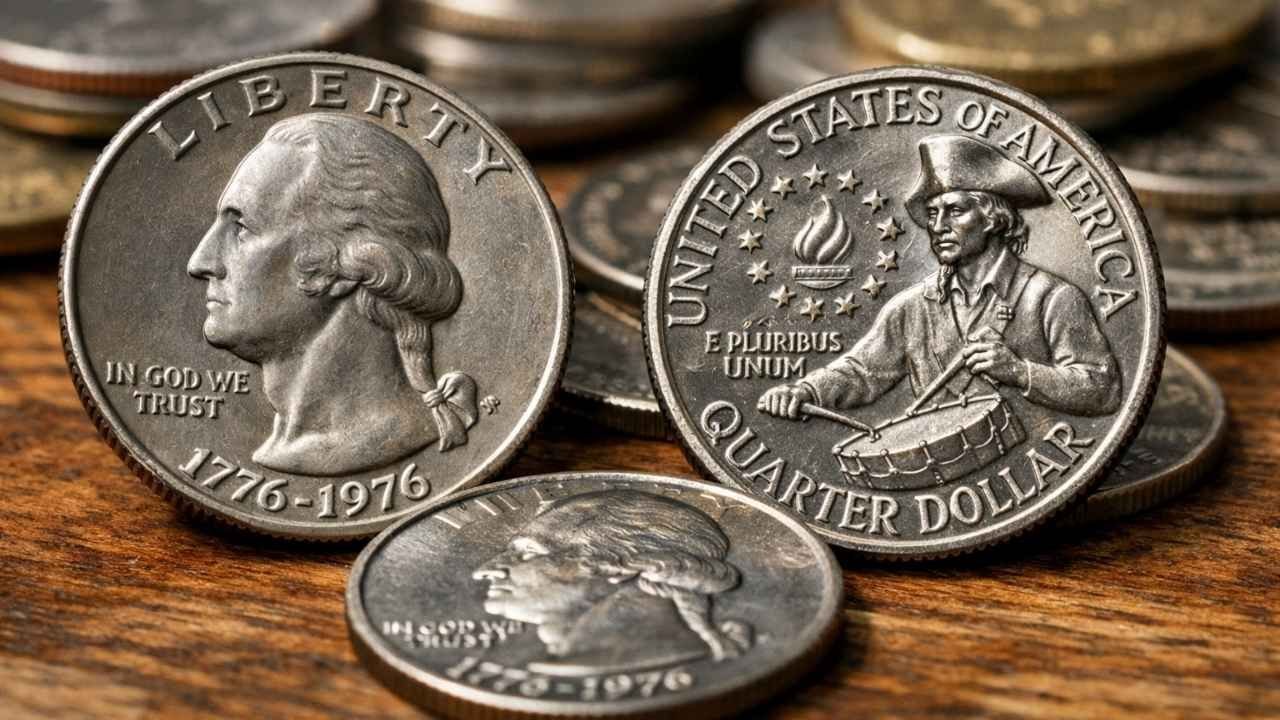
The 1976 Bicentennial Quarter is one of the most recognizable coins ever issued by the United States. Created to celebrate America’s 200th anniversary of independence, this historic coin blends patriotic symbolism with modern collectible appeal.
While millions were minted, certain versions of the Bicentennial Quarter can be worth far more than their 25-cent face value. If you’ve saved one in a drawer or discovered one in pocket change, here’s what you need to know about its potential value today.
The History Behind the 1976 Bicentennial Quarter
In honor of the nation’s bicentennial celebration, the U.S. Mint redesigned three circulating coins in 1975–1976: the quarter, half dollar, and dollar. The Bicentennial Quarter replaced the traditional eagle reverse with a special commemorative design.
The obverse still features George Washington, consistent with standard quarters. However, the reverse showcases a colonial drummer boy, a powerful tribute to the American Revolution. The design was created by artist Jack L. Ahr after winning a national design competition.
Instead of a single year, these quarters display the dual date “1776–1976,” symbolizing two centuries of American independence.
Key Specifications and Mint Locations
The 1976 Bicentennial Quarter was struck in multiple versions and at different mint facilities:
- Philadelphia Mint (no mintmark)
- Denver Mint (D mintmark)
- San Francisco Mint (S mintmark)
Most circulation coins were made of copper-nickel clad composition. However, the San Francisco Mint also produced special 40% silver collector versions.
Because these coins were widely distributed, total mintage exceeded 1.6 billion pieces. That high production number is why most examples remain close to face value—unless condition or rarity elevates them.
How Much Is a 1976 Bicentennial Quarter Worth?
The value depends primarily on condition, mint type, and whether the coin has special characteristics such as proof finishes or mint errors.
Circulated Coins
Most Bicentennial Quarters found in everyday circulation fall into this category.
Typical value range:
- $0.25 to $1
- Slightly higher for well-preserved examples
Unless the coin is in exceptional shape, circulated pieces generally carry modest premiums.
Uncirculated Coins
Uncirculated coins show no signs of wear. They maintain strong luster and sharp detail.
Typical value range:
- $3 to $10 for standard Mint State coins
- Higher for premium grades
Coins graded MS67 or higher on the Sheldon scale can command significantly stronger prices, especially if certified by a reputable grading service. Exceptional examples have sold for hundreds of dollars at auction.
Silver Bicentennial Quarters (San Francisco)
The 40% silver versions, produced primarily for collectors, carry intrinsic metal value in addition to numismatic appeal.
Typical value range:
- $6 to $15, depending on silver prices and condition
- Higher for pristine proof versions in original government packaging
These are identifiable by the “S” mintmark and slightly different edge appearance compared to clad versions.
Proof Coins
Proof Bicentennial Quarters were specially struck with polished dies and mirror-like finishes. They were not intended for circulation.
Typical value range:
- $5 to $20
- Premium examples in flawless condition may sell for more
Proof coins are especially attractive to collectors who value display quality and long-term preservation.
Mint Errors That Increase Value
While most Bicentennial Quarters are common, rare mint errors can dramatically increase value.
Collectors actively seek:
- Double die strikes
- Off-center strikes
- Clipped planchets
- Misaligned dies
- Wrong planchet errors
Authentic error coins can sell for $100 or more, depending on severity and rarity. However, professional verification is essential, as many post-mint damages are mistaken for true errors.
The Truth About Million-Dollar Bicentennial Quarters
From time to time, headlines claim a Bicentennial Quarter sold for millions of dollars. In most cases, these stories are exaggerated or refer to extremely rare error coins in extraordinary condition.
For the vast majority of owners, a 1976 quarter will not fund retirement. However, top-grade silver or rare error specimens can still represent meaningful collector value.
How to Evaluate Your Coin
If you want to determine whether your Bicentennial Quarter has premium value, follow these steps:
1. Examine the Condition
Look for:
- Strong luster
- Sharp details in the drummer’s uniform
- Minimal scratches
- No discoloration
Heavy wear significantly reduces collectible value.
2. Check the Mintmark
Look to the right of Washington’s ponytail on the obverse:
- No mintmark = Philadelphia
- D = Denver
- S = San Francisco
An S mintmark may indicate a proof or silver issue.
3. Inspect the Edge
Copper-nickel clad coins show a visible copper stripe along the edge.
Silver versions do not show this distinct stripe.
4. Consider Professional Grading
For high-quality coins, professional grading can enhance resale value. Certified coins often command higher prices because buyers trust third-party authentication.
Where to Buy or Sell Bicentennial Quarters
If you believe your coin holds premium value, consider these options:
- Established coin dealers
- Reputable online auction platforms
- Certified coin marketplaces
- Major coin shows
Before selling, research recent sales of similar coins in comparable condition. If the coin appears especially valuable, obtain multiple opinions before finalizing a transaction.
Always avoid cleaning your coin. Cleaning can significantly reduce collector value.
Investment Potential and Long-Term Outlook
The 1976 Bicentennial Quarter holds enduring cultural and historical appeal. However, because of its large mintage, it is not considered a rare coin in standard condition.
That said, premium-grade, silver, and certified examples may continue to appreciate modestly over time. For collectors, the coin offers more historical significance than aggressive investment potential.
It remains one of the most collected modern U.S. coins and a foundational piece in many American coin sets.
Final Thoughts
The 1976 Bicentennial Quarter represents more than spare change—it symbolizes 200 years of American independence and national pride. While most examples are worth close to face value, certain uncirculated, silver, proof, or error versions can command meaningful premiums.
If you own one, take a closer look. With the right combination of condition, mintmark, and rarity, your Bicentennial Quarter could be a small but valuable piece of American history.