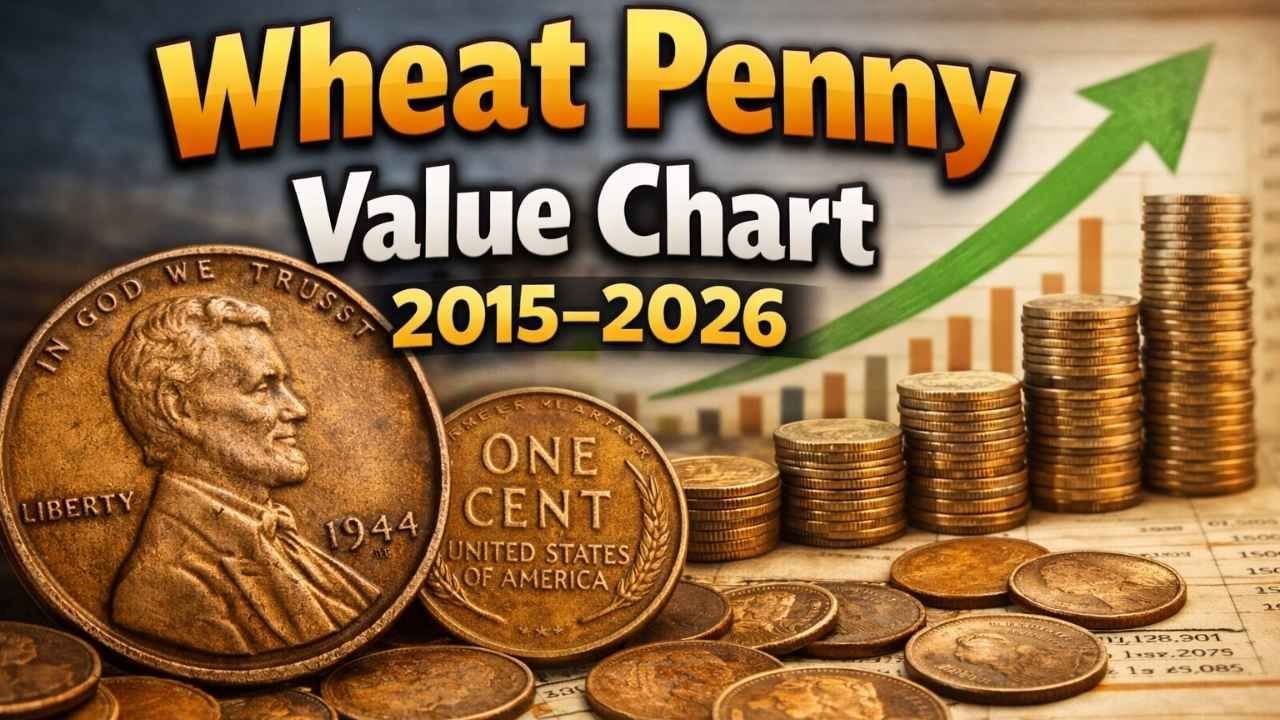
The Wheat Penny, first minted in 1909, remains one of the most cherished coins in American numismatics. Featuring Abraham Lincoln on the obverse and two wheat stalks on the reverse, this iconic coin has captivated collectors for over a century. While most Wheat Pennies carry only nominal value, rare editions, key dates, and error coins can fetch hundreds or even thousands of dollars. For collectors and enthusiasts in 2026, understanding the current value of these coins is essential. This guide provides a comprehensive overview of Wheat Penny values from 2015 to 2026, including insights into key dates and error coins.
A Brief History of the Wheat Penny
The Wheat Penny was introduced to celebrate the 100th anniversary of Abraham Lincoln’s birth. Designed by Victor David Brenner, the coin showcased Lincoln’s portrait on the front, while two wheat stalks adorned the reverse. This design remained in circulation until 1958, when the Lincoln Memorial design was introduced.

Despite being discontinued, the Wheat Penny continues to be a collector favorite due to its historical significance and the variety of mint marks, key dates, and minting errors that create rarity. Over time, the value of these coins has fluctuated, making it important for collectors to understand what drives worth in today’s market.
Factors That Influence Wheat Penny Value
Several elements determine the value of a Wheat Penny:
Year of Minting
Some years produced fewer coins or hold historical significance, increasing their value. Rare years are often the first point of interest for collectors.
Mint Mark

Mint marks indicate the origin of the coin, with common marks including “D” for Denver, “S” for San Francisco, and no mint mark for Philadelphia. Rare mint marks can significantly elevate a coin’s value.
Condition and Grading
Condition is critical. Coins are graded on a scale from 1 to 70, with uncirculated examples fetching much higher prices than worn or damaged coins. Well-preserved coins attract premium valuations.
Special Features or Errors
Error coins, such as double strikes, off-center designs, or unusual metal compositions, are often highly sought after. These anomalies can transform a standard coin into a rare collectible.
Wheat Penny Value in 2026
While most Wheat Pennies retain minimal value, certain factors—rare year, mint mark, condition, or errors—can dramatically increase worth. Here’s a breakdown of common categories:
Common Wheat Pennies (1909–1958)
For everyday circulated Wheat Pennies:
- 1909–1940: Typically worth $0.10–$0.50, with uncirculated or low-mintage examples ranging from $5 to $100.
- 1941–1958: Usually valued near face value, $0.05–$0.25, though well-preserved or error coins can reach $1–$20.
Key Date Wheat Pennies
Some years are considered “key dates” due to limited production or historical importance:
- 1909-S VDB: Minted in San Francisco, featuring designer Victor David Brenner’s initials. Circulated value: $800–$1,500; uncirculated: several thousand dollars.
- 1914-D: Denver mint with low production. Circulated: $50–$100; uncirculated: several hundred dollars.
- 1922 No D: Missing Denver mint mark due to a minting error. Value: $1,000–$5,000 or more.
Rare Wheat Pennies with Errors
Error coins significantly boost value:
- 1943 Copper Penny: Struck in copper instead of steel, with very few known examples. Value: $200,000–$500,000.
- 1955 Double Die Obverse: Notable doubling in the word “LIBERTY.” Value: $500–$1,000 in uncirculated condition.
Wheat Penny Value Chart: 2015–2026
| Year | Average Circulated Value | Key Date / Rare Coin Value |
|---|---|---|
| 1909 | $0.50–$2.00 | $800–$1,500 (1909-S VDB) |
| 1910 | $0.10–$0.30 | $20–$100 |
| 1914 | $0.50–$1.00 | $50–$100 (1914-D) |
| 1922 | $0.10–$0.50 | $1,000–$5,000 (No D) |
| 1931-S | $1.00–$3.00 | $50–$200 |
| 1943 | $0.10–$0.50 | $200,000–$500,000 (Copper error) |
| 1944 | $0.05–$0.25 | $100–$500 (Steel error) |
| 1955 | $0.10–$0.50 | $500–$1,000 (Double Die Obverse) |
| 1956 | $0.05–$0.25 | $30–$100 |
| 1958 | $0.05–$0.25 | $25–$50 |
Conclusion: The Enduring Appeal of the Wheat Penny
The Wheat Penny continues to captivate collectors worldwide. While most coins are worth little beyond their face value, rare years, mint marks, and errors create extraordinary opportunities for collectors. Understanding what drives value—from historical significance to condition and anomalies—can turn a modest collection into a prized assortment.
In 2026, the best approach is vigilance, knowledge, and preservation. Key dates, minting errors, and well-maintained coins hold the greatest potential, making the Wheat Penny not just a piece of history but also a lasting investment in American numismatics. Whether you are a beginner or a seasoned collector, keeping an eye out for these treasures can make every coin jar a potential goldmine.